Educational articles
- Home
- Educational articles
- What is the importance of Old European civilisation for us?
What is the importance of Old European civilisation for us?
2024 02 05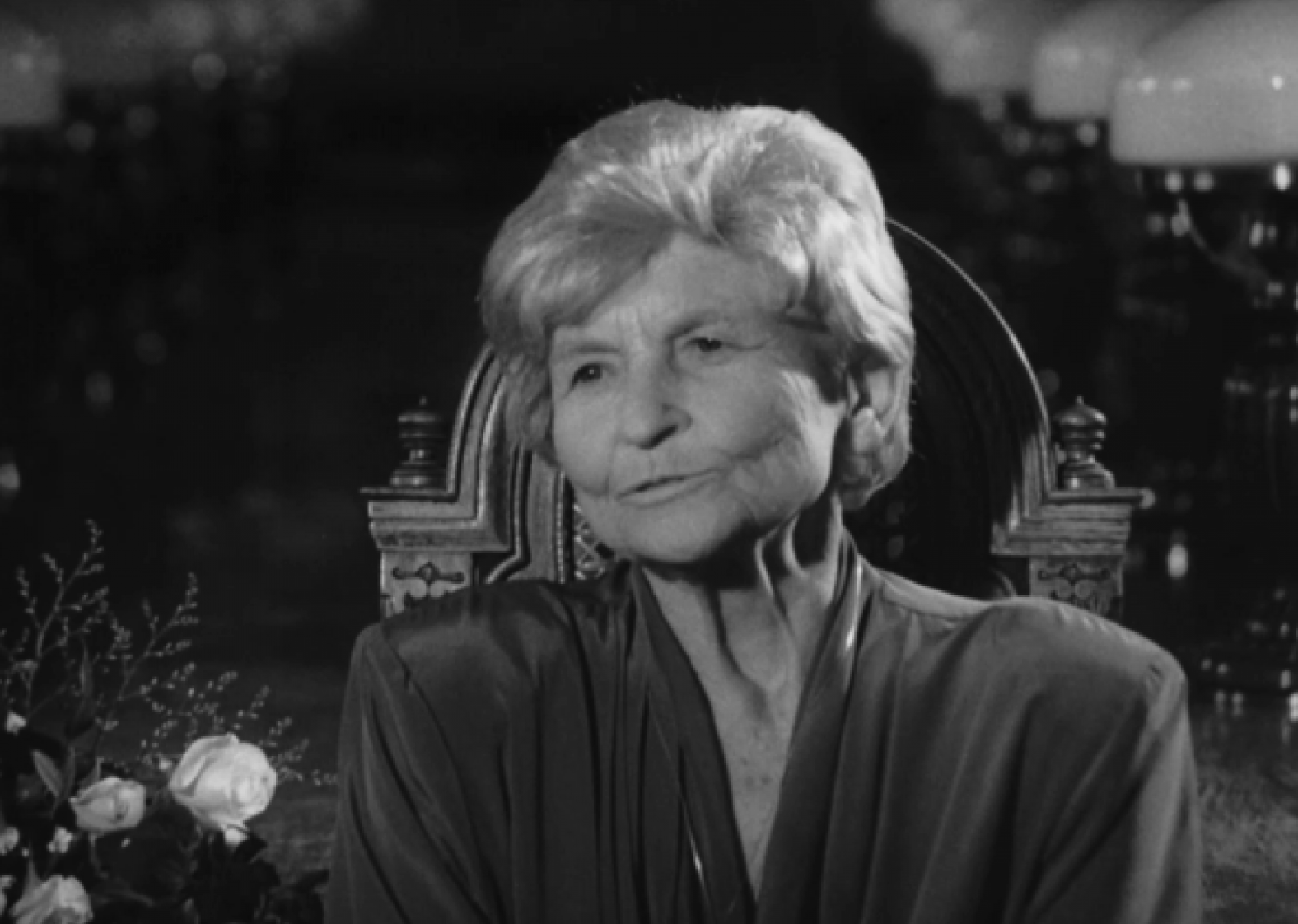
Marija Gimbutienė / Stop-frame
When I was digging for a long time on my own, when I was travelling around Europe, in all the museums, the idea and the understanding of what are these symbols of Old Europe, what are these sculptures, these goddesses, which are in hundreds of museums, slowly grew. And then, perhaps, I would say, those happy, magical hours came when, one by one, the symbols began to emerge. That vision and that feeling with my intuition and my experience, my experience over a long period of time, that this is the real thing, that this is what I was looking for, here is the little diamond or whatever you want to call it. (...)
Since I'm interested in the period between about ten thousand years ago and the beginning of history, I would say that we have a particularly good opportunity to learn from those times, because the culture that I'm trying to recreate now is, in my understanding, a much more pleasant, gentle, peaceful culture, a culture of art. (...)
We do not come directly from East Europe, but from central Europe, because central Europe was inhabited for about a thousand years by both ancient Europeans and "aliens" (Indo-Europeans). And once that culture was, in my opinion, Indo-Europeanised, then those natives settled between Berlin and Moscow.
That Indo-European or Kurgan culture was a patristic culture - a father's culture, a man's culture, with a patriarchal system, a hierarchical system, and a pastoral economy. And just because they were cattle breeders, perhaps that triggered the thing that the man became important in society: he had to control large herds of cattle and then ride horses, make weapons, and so, by inertia, that culture developed and became a war-like, aggressive, masculine culture.
On the surface, it seems that we are such fans of knights, fans of heroes, riding horses, conquering the world, but in fact our foundation is the feminine culture that has sustained our culture to this day. A lot of our songs come from Old Europe. That whole love of vegetation, that sense of life in a leaf or in a tree or in a bird or in a stone - all that is from Old Europe. We have inherited a lot from there, but it's just that male horse layer on top. We have survived mainly because of that layer of Old Europe: that we are so attached to the land, that we love the land, that we kiss the land, that we have kept the old goddesses like Laima, the Witch - purely from Old Europe. (...)
And we need to get used to the idea that the world was not always what it is today. The way it is today is just the result of three hundred years of that mechanistic world, that mechanistic civilisation. Although patriarchy started about five thousand years ago. Wars started in Europe five thousand years ago, but not before that. Before that, we have no record of man fighting against man.
I disagree with the notion that civilisation begins when guns, wars, hierarchy and male power appear. That is not my concept at all. In my concept, a civilisation is one in which people live happily, create art, create a good life, live in harmony. Where one sex does not overpower the other sex, where there is a balance between the male and female world.
From 7th millennium BC, when agriculture took place, a peaceful agricultural culture prevailed and the social system was based on the mother, it was the matristic culture. Everything revolved around the mother, around the woman. And later on, the woman, especially in religious life, was of extraordinary importance. But men were not suppressed either, they were very much needed members of society - they had their own jobs, their own areas in which they could express themselves. These goddesses date back a very long time, I would say as early as the late Paleolithic, and they are depicted in sculptures. ( ...) Every part of the body meant something: it symbolised the birth of life, the further development or the rebirth of life itself. (...) That was probably the most important motif in that old religion - rebirth. (...)
The old Lithuanian belief has survived to the present day - with nature, with the earth, with animals, with all vegetation. This is very beautiful for me because it makes you think that man is a tiny little part of it (nature) and that you are not a hero or a warrior in this world - you have to be part of the universe.
Man is now beginning to realise where he has gone, he is beginning to realise that we have come to the end of the world - that we are destroying ourselves and destroying all of nature. Humanity is now very hungry for better times and very much wants to go back to nature, to a harmonious life. And here is our greatest hope now, that somehow we can dig ourselves out of the bottom of the pit and build a better future. Sometimes there are difficulties, you have to continue, keep going. And then, man, you look for where to draw strength from, where to get that water of life. And for me, Lithuania has always been the water of life. (...)
Lithuanians deeply love their land, but they forget that they are members of a big world in which there is an eternal struggle for existence. In this struggle, one must be strong to survive. If not quantitatively, then qualitatively. A nation that complains about its unhappy fate and in a thousand years and more has only lost its lands and its people can only be saved by a very strong determination to grow stronger, to educate, to cultivate. In order to gain at least moral weight in the community of nations.


 Rūdninkų g. 18-203, Vilnius LT-01135
 info@gilu.media