Educational articles
- Home
- Educational articles
- The value of body intelligence?
The value of body intelligence?
2024 10 09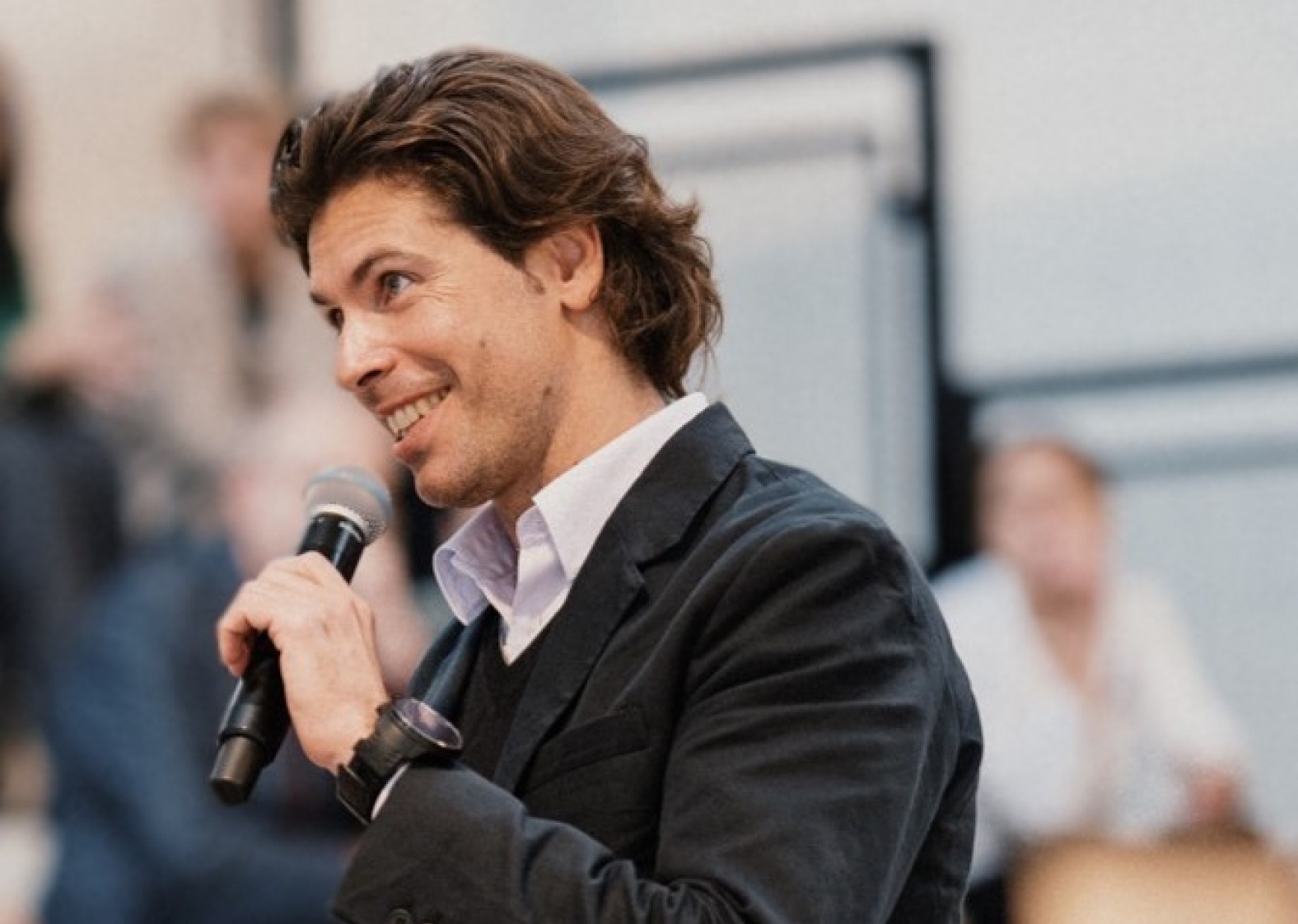
Justas Kučinskas / Photo by V. Makovskaja
How many meetings have failed because we were sleep - deprived or felt that something inside us wasn’t right? If we don’t take our body seriously, if we don’t pay attention to the internal quality with which we arrive at our workplace, we miss a huge part of reality, and we make decisions not from the best possible standpoint.
If some news or thought shocks us, that emotion will reflect in our bodily sensations, and as we go into the next meeting, we carry it with us. What happens to us in life, what happens around us - these experiences are locked and stored in the body and, over time, become our way of acting and communicating with the world. And not always is this way the most appropriate.
We “read” the world by looking at objects and people. We imitate certain states and movements - they affect us, shape us, become part of our identity, and, in a sense, lock us into a certain feeling or mental stereotype. However, the body can be a tool that allows us to return to a state of neutrality, to the “here and now” moment, awakening intuition and opening new possibilities for action. This is a huge potential, which perhaps we haven’t fully noticed yet.
How do we shed emotions, experiences, traumas, or stereotypes that we inherit from others without much reflection? A practice is needed that would bring us back to the feeling of the present moment. And the body becomes an ally here, because our sensations, our sensory input lead us to this place. A person who acts physically is in a very centered, grounded state, while a person sitting in an office somewhere in a skyscraper, solving “earthly” problems, is actually very far from the earth, very far from their physicality. Being in the body means returning from a virtual state, where attention is scattered across constantly changing images, thoughts, and sounds from the outside or from within our own minds - the internal narrative is hard to quiet, even when talking to others.
So, take a step back and find your point of neutrality. Firmly plant your feet on the ground, breathe in and out, feel: “Here I am, I am in this place, here is my axis.” Notice what thought, feeling, or action arises. If we had more such moments in our day, if we were taught from an early age to return to a state of neutrality, I believe meetings and relationships with others would be of higher quality.
It seems to me that any practice, any encounter with our body, makes us more attentive. By consciously creating a small distance from the thought or emotion that arises, we can not only observe what is happening with us, but also discover new ways of action and behavior. Every person can master this, and I would encourage you to not forget this possibility.
Justas Kučinskas, Movement Teacher, Philosopher
Text prepared based on material from the "The Future Gene" radio show (hosted by Rasa Baltė Balčiūnienė).


 Rūdninkų g. 18-203, Vilnius LT-01135
 info@gilu.media