Educational articles
- Home
- Educational articles
- On the Borders of Life and Death
On the Borders of Life and Death
2024 10 29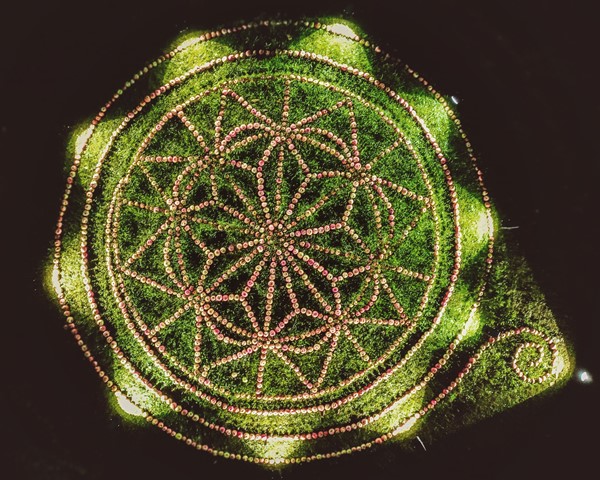
Photo by Rasita Liulienė
Daiva Vaitkevičienė
Mythologist, Doctor of Humanities
What do I find valuable in Marija Gimbutas' research on Baltic mythology? The most striking aspect for me is her study of the three goddesses: Laima, Ragana, and Žemyna. The pantheon of Old European goddesses is deeply feminine, and Gimbutas applies her insights to Lithuania, revealing that it reflects the same cycle of Life and Death.
The goddess Laima is associated with birth - she protects mothers, blesses newborns. Laima is depicted as a bird goddess and sometimes portrayed in folklore as a swan.
The goddess Ragana in Lithuanian mythology is the one who destroys, harms, and burns the blossoms of rye, preventing them from yielding grain. However, according to Gimbutas, such actions are necessary because both life and death have their boundaries. If there is an overwhelming surplus, it poses a threat, and thus, it must be curtailed. This reminds me of Lithuanian folk tales where a person, through trickery, locks death in a snuffbox. No one dies, and the population grows excessively; people age and become ill, but they cannot pass away. Thus, death is essential and meaningful.
Here emerges the third crucial goddess - Žemyna, who is connected to regeneration. Birth is vital, death is vital, but after death, life emerges anew.
Marija Gimbutas sought answers to some of the most profound questions: "Why are we born, why do we live, and what is death?" She found her answer - it is the Circle of Life.
Excerpt from the podcast “Marija Alseikaitė-Gimbutas’ Old Europe.”


 Rūdninkų g. 18-203, Vilnius LT-01135
 info@gilu.media