Educational articles
- Home
- Educational articles
- What can we learn from Bhutan's imagery?
What can we learn from Bhutan's imagery?
2024 06 25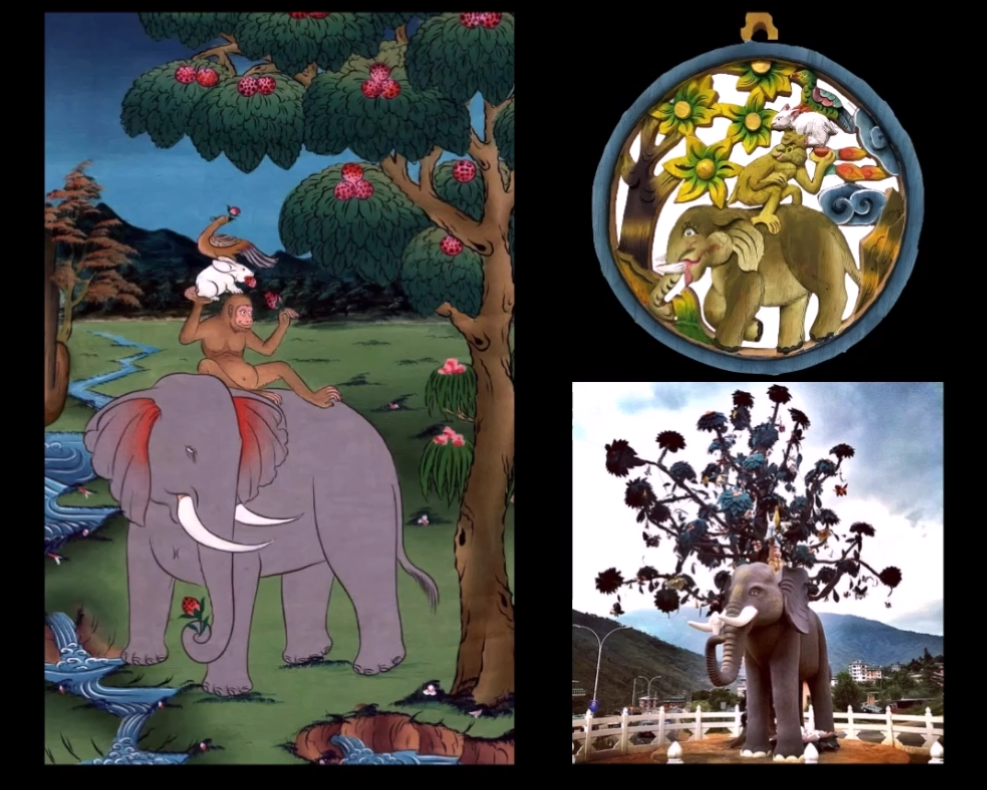
Photo by G. Šeputis
What kind of images do you see around you every day? What feelings do they evoke in you? Do they inspire positive thoughts?
“We are what we look at,” say researchers studying the impact of images on people. Visuals affect our subconscious, influencing our well-being, thoughts, choices, and actions. Images reach our brain faster than food reaches our body, so it’s crucial to consciously recognize what we give our attention to.
Visual communication expert Gintaras Šeputis states that images impact not only individual well-being but also the emotional health of society. A positive example of this is Bhutan, a country that places particular importance on the well-being and happiness of its people. In Bhutan's capital, Thimphu, one rarely sees advertising billboards, as the government aims to limit consumerist habits. However, there is one particular visual (in the form of drawings or sculptures) seen everywhere - on building walls, in local establishments, and near temples. What message is encoded in this image? Bhutan prominently displays the harmonious coexistence of four animals - an elephant, a monkey, a rabbit, and a bird - all nurturing the tree of life and harmony. This image reflects Bhutan’s goals: to work together harmoniously to create happiness and goodness and to strengthen the vitality of the community.
Bhutan’s concept of happiness is far broader than in Western culture, where it often becomes synonymous with material wealth. For Bhutanese people, happiness is something internal - it is peace of mind. In Bhutan, it is believed that true happiness only comes from “serving others, living in harmony with nature, having opportunities to cultivate and expand one’s innate wisdom, and having the chance to realize one’s brightest ideas.”


 Rūdninkų g. 18-203, Vilnius LT-01135
 info@gilu.media