Educational articles
- Home
- Educational articles
- Symptoms of lively organisations: a culture of trust
Symptoms of lively organisations: a culture of trust
2023 03 03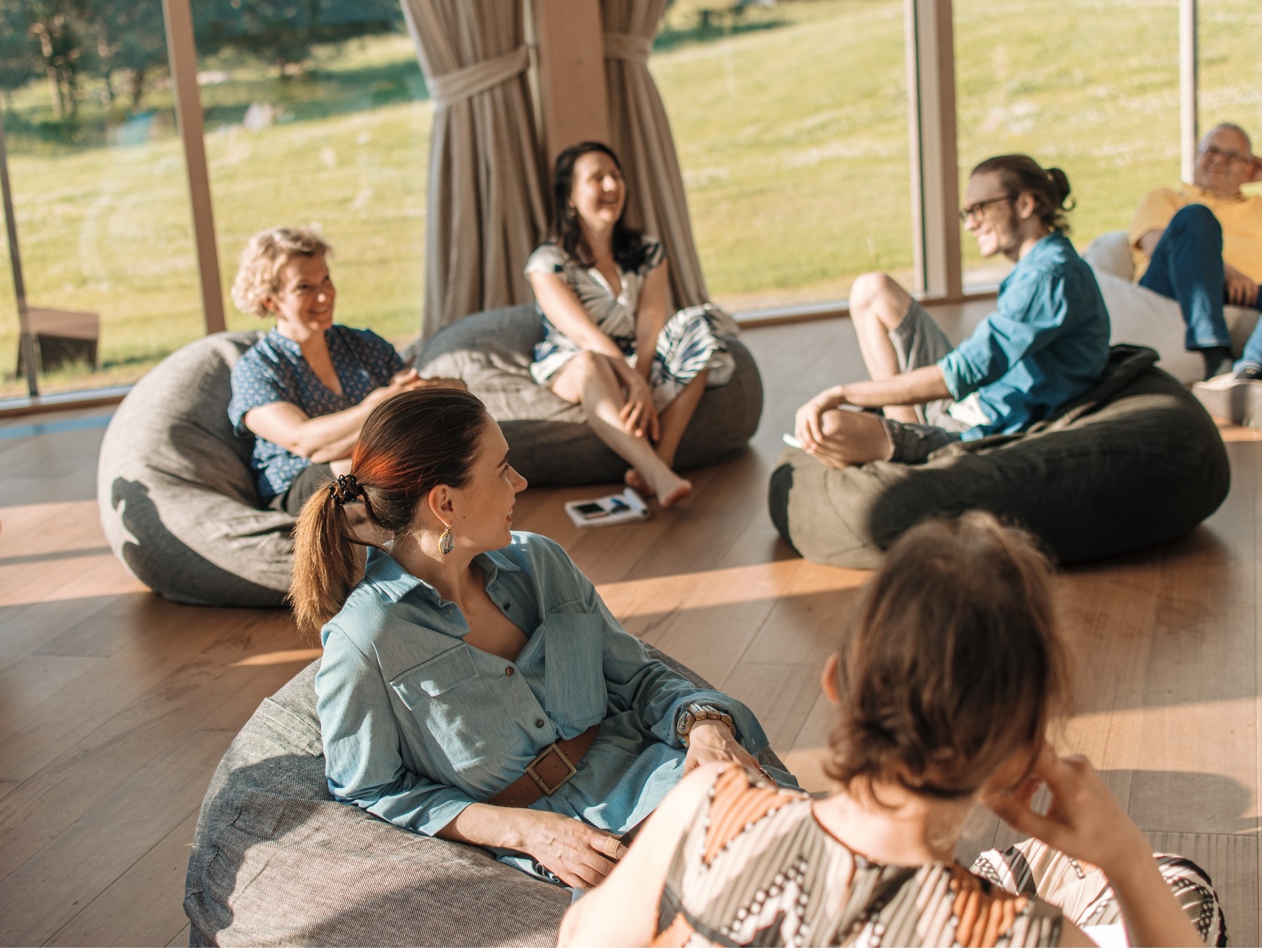
Associative photo
Rinardas Goda
Entrepreneur, trainer, private school founder
How do people in a lively organisation communicate? Easily, with humour, without appearing to be working. Sometimes they argue, but the topic of the argument is usually related to the goals of the organisation. They don't shy away from constructive conflict, just as they are not afraid to make mistakes. In this way, many excellent solutions and perhaps a few instructive mistakes are made. So one of the symptoms of a vibrant organisation is the bonds between team members that have developed in a culture of trust.
Where does a company get the climate that leads to long-term excellence?
The primary cause of organisational culture is the leader or owner. It may be both together. What is the leader's attitude towards people? Does he or she believe they can be trusted? I often hear answers from company leaders that many employees are immature, like children. They cannot be trusted. Well, when they prove it... And here is a big stone in the path of us leaders. People will never live up to our trust until we start trusting them in advance. Trust, freedom and authority to make decisions come first, and only then will maturity, strong decisions and prosperity slowly follow.
Unfortunately, managers, leaders think they do not have the time. Everyone is running around, rolling in circles, and if you stop, you are guaranteed to lose your position, your competitiveness and your profits! So, even if they realise their fundamental mistake, they postpone the change until later, when things are calmer. But "calmer" never comes. Most of the time, the determination to make such changes comes when things are bad. When there is nothing left to lose. If you can still run, you can still suffer.
Another argument of such leaders is that there are no people with whom you can work "normally"! You can and should work with those who are around you. I am one of those people who do not know how to network. I have never attached much importance to it. Thanks to my partners, there were people around me that I didn't sort into good and bad. Everyone is good and everyone can be trusted until they prove themselves otherwise. This conviction came slowly and with pain, but it is now the deepest reason for the cash flow I generate.
Another part of managers say they trust their people. After all, all people are good, hardworking and honest! How can you not trust them? I do! Then we take a closer look at the control systems that are in place in the organisation. Why does it matter to you when a person comes and goes to work and, more generally, where and how they work? Why are the powers of many employees limited to narrow job descriptions? Why don't employees see the basic financial statements of the whole company? Why do some (more trustworthy) employees set sales plans for others (less trustworthy) and are obliged to follow them? Why do most employees not have a stake in the company's bottom line? Here are just a few of the "whys?" Sometimes managers lie to themselves, claiming that they trust their people. In reality, there is a hierarchy of trust: a director trusts only his functional managers, who in turn trust his people, and so on, all the way down the pyramid. It is not surprising that in such a structure, clan subcultures emerge, with all the consequences.
In a hierarchical structure, speaking from a position of power dominates. People often interact for personal rather than corporate gain. Their status, their influence, their careers are important to them, so they expend much of their energy on accusations, judgement, juxtaposition, defence, gossip, infighting strategies. If there is time, something can be done for the company. Relationships based on distrust generate weak decisions, which are usually based on power rather than creativity. Such an organisation struggles to adapt to the rapidly changing needs of its customers and rarely comes up with truly innovative, forward-looking solutions.
For the leader of a lively organisation, it is important that his people know how to take care of themselves. If they can't, they are unlikely to be able to look after each other and their customers. You can only understand your customer's needs if you understand your own. It doesn't happen otherwise. And that is where the rational part of the organisation ends. We travel towards ourselves through games, through thanking each other and having heart-to-heart conversations in circles, through inspiring films and texts, through music, poetry, dance and theatre. The more balanced the rational and irrational parts of a system are, the more vital, efficient, adaptive and creative it is. These are the laws that come from nature.
Strong, trusting relationships within a team are the most important capital of a lively organisation. It takes time to build, can be remarkable to maintain, but it can be lost very quickly.


 Rūdninkų g. 18-203, Vilnius LT-01135
 info@gilu.media