Articles
- Home
- The Old Europe
- Articles
- Articles
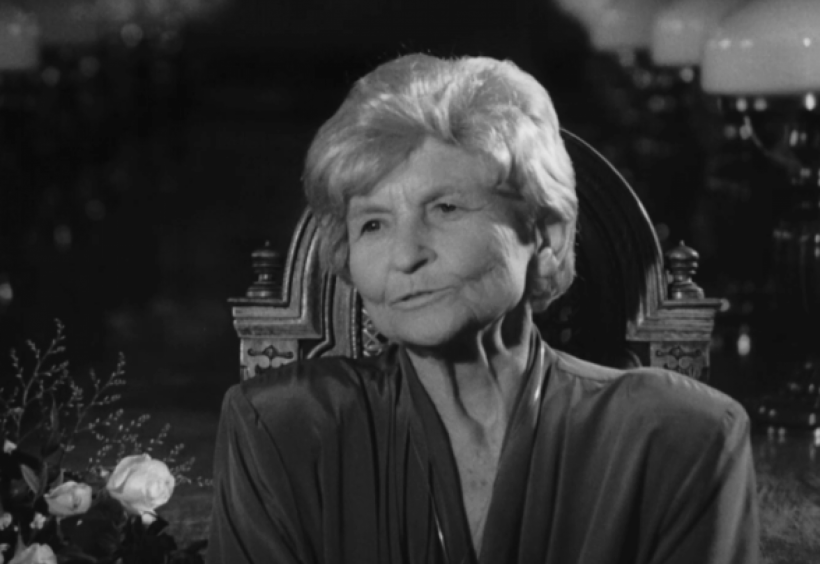
Daujotytė on Gimbutas: her perspective allows us to see women as creators of culture
Why is Marija Gimbutas still relevant today? Are her ideas still alive? We discuss this with literary scholar Prof. Viktorija Daujotytė and archaeologist Dr. Agnė Čivilytė. Although the two interviewees represent different fields, both discovered Gimbutas in their own ways, yet they share a common understanding: Gimbutas not only sparked a revolution in archaeology and academia but also dared to speak of things others kept silent about - particularly, the significant role of women in culture.
This interview is based on the discussion “Rethinking Cultural Identity: The Civilization of the Goddess – Creative Women in History,” held at the House of Histories.
– How did you discover Marija Gimbutas? What personally interested you about her?
Viktorija Daujotytė: I first saw her in person at Vilnius University, where she had come to give a lecture. I remember her piercing gaze and pleasant smile - that was enough to make a strong first impression. She seemed like someone I would want to get to know, to learn more about her and her work, to read her writings. After hearing her lecture, I realized - she spoke of things that resonated with me, things I easily understood. Gimbutas never tried to prove her ideas. As writer Ieva Simonaitytė once said: “If I wrote it this way, then that’s how it must have been.”
Agnė Čivilytė: I learned more about Gimbutas while studying in Germany. At the University of Tübingen, I saw her portrait among the group of men who defended their dissertations at the same time as she did. It struck me just how exceptional she was. As a scholar, I also had a critical perspective: while studying at Heidelberg University, I analyzed her hypotheses, especially in seminars on anthropomorphic art. Yet I was repeatedly struck by the persuasive power of her texts - it seemed impossible to doubt what she wrote.
– How do you assess Gimbutas’ talk about the Civilization of the Goddess?
Viktorija Daujotytė: In speaking about the Civilization of the Goddess, she was essentially talking about the energy of life - a world that develops not through power, but through giving life and creating. She had envisioned such a model in her soul, in her imagination. And her vision was very real - just like our ethnographic art, created by women weavers with no formal education. Gimbutas’ perspective allows us to see women as creators of culture, as carriers of tradition.
Agnė Čivilytė: What’s important is that Gimbutas saw the roots of culture in relationship with nature. She dared to say: there was a civilization before civilization, one that had its own script (symbols), its own art, and a harmonious society dominated by women.
– Where did Gimbutas find the courage to put forward ideas that are still considered controversial today?
Agnė Čivilytė: She had a strong self-confidence. It seems she had a personal motto: “I am special; I will not give up.” It was both ambition and inner strength. She never sat quietly in a corner, but she was never arrogant either. Imagine - she traveled across Europe for archaeological excavations, obtained funding, led the projects (in which only men worked), and still managed to write books. That certainly required strength.
Viktorija Daujotytė: Gimbutas wrote that her identity was shaped significantly by figures like Jonas Basanavičius and Vydūnas. She also found strong female role models in her family. For instance, her grandmother Agota Janulaitienė - a farmer, a widow, who raised many children, sent them to school, and ran a farm. From such an example, one can draw much inspiration for authoritative action. Her cousin Meilė Lukšienė, who was older and helped raise her, showed by example that a woman can achieve things. Gimbutas once wrote: “I will not be a sheep among sheep.”
– Could Gimbutas’ legacy serve as a foundation for the “rehabilitation” of women in history?
Agnė Čivilytė: In Gimbutas’ time, male dominance was clearly evident; today, the situation is changing. But what she gave women is strength and self-awareness - what it means to be a woman, to have a woman’s body, to have the ability to create harmony and nurture a family. These are important and inspiring values. And they in no way hinder one’s career or achievements beyond the home. Self-confidence and belief in what you do are the most important things.
Viktorija Daujotytė: She felt her femininity as a life mission. One of her thoughts is worth remembering: “I liked giving birth.” That reflects a deep awareness of herself as a bearer of life. And through that comes the creation of culture, the shaping of life, and a sense of the sacred.
Archaeologist G. Rimkutė: "Gimbutas’ ideas help us rethink the concept of civilization"
The ideas of Marija Gimbutas - from the Kurgan hypothesis to the concept of the Goddess cult - continue to spark discussion among scholars, artists, and the general public. In this interview, archaeologist Dr. Gabrielė Rimkutė shares what it means to work with such a legacy: how to portray a figure who, to some, is a visionary, to others, not scientific enough, and to still others, a barely known name.
“Marija Gimbutas was one of those scholars who not only studied archaeological finds but also sought to understand their broader cultural and spiritual meaning. Her theory of Old Europe offers an alternative narrative of prehistory: one not centered on conquest, but on order, peace, connection with nature, symbolism, and spiritual worldview. I think this resonates with many people today - especially when we’re tired of conflict, speed, and chaos,” says Rimkutė.
The conversation explores the relevance of Gimbutas’ insights today, the myth of human progress, and why prehistory - where women held authentic significance - is becoming important again.
This interview is based on material from the event series "Rethinking Cultural Identity", held at the House of Histories, and the documentary film "Marija Gimbutas: Sense of the Future", directed by Gintaras Šeputis and Rasa Baltė Balčiūnienė.
- How did you first encounter Gimbutas’ world?
I first came across her work in high school and, of course, during my archaeology studies. But a deeper connection developed while working on the exhibition "Goddesses and Warriors." It was an intense and very personal process - while diving into Gimbutas’ biography and highlighting her deep character traits, I began to truly understand her path, her choices, and the development of her theories. I realized that my task was not to skim the surface of facts, but to convey a full picture - her ideas and life story - from many different angles.
Interestingly, before starting work on the exhibition, I conducted a survey - asking people what they knew about Marija Gimbutas. I discovered that many associated her more with ethnography than with archaeology or the concept of Old Europe. That was an important clue for me: we need to start telling Gimbutas’ story from scratch. We need to create an opportunity to truly get to know her - as a scholar, as a thinker, and as a woman.
- What did you want to show through this exhibition?
We wanted to reveal Gimbutas both as a person with a very unique life story and her perspective on prehistory. It was also important to show that her ideas are still alive and being reflected upon today. We wanted visitors to come away with fundamental questions about their own past and present, to see parallels and allusions between what seems like very distant worlds - then and now.
I believe that everyone who visited the exhibition felt the energy of prehistory. Those who paid attention to the details likely discovered a lot about their own inner worlds. We wanted the viewer to leave with their worldview slightly shaken.
As one of the exhibition curators, my responsibility was to focus on Gimbutas’ personality - not only to present her as a scientist but also as a woman with a clear worldview, a unique and sometimes even mystical figure. We wanted the exhibition to feel like a personal encounter - so that the visitor could sense who she was, how she thought, and what she believed in. Such encounters leave a deeper imprint than a mere list of facts.
- How do you evaluate Gimbutas’ theory of the Goddess cult and Old Europe?
It’s a very powerful, yet controversial theory. Gimbutas described the earliest period of human history as dominated by a peaceful culture in Europe, which, according to her, left behind many archaeological symbols of femininity. This culture emphasized connection with nature, a cyclical understanding of time, community values, and an egalitarian society. Gimbutas called this Old Europe.
Later, around the 4th-3rd millennium BCE, Old Europe was overtaken by the so-called Kurgan culture - nomadic tribes from the southern steppes who brought an entirely different worldview: competitive thinking, patriarchy, new burial traditions, and a different lifestyle.
This is the well-known Kurgan hypothesis, one of Gimbutas’ most famous theories. It was bold - and thus sparked much debate. Some saw it as a revolutionary view that showed archaeology could address not only objects but also changing values. Others criticized her for overly broad interpretations.
Interestingly, Gimbutas’ ideas continue to be studied today - for instance, ancient DNA research reveals new data about Eurasian migration waves that support her theories, including the movement of the Kurgan culture. This shows that Gimbutas reached significant conclusions with far fewer scientific tools than we have today.
On the other hand, her theory of a prehistoric Goddess cult - her second major hypothesis - is still highly disputed. One of the main criticisms is the lack of empirical evidence. The female figurines Gimbutas identified as goddesses are seen by some researchers as simply anthropomorphic figures with no clear function; others don’t even agree they all depict women. Opinions range from full support to accusations of romanticism.
Yet, even if some of her conclusions aren’t considered scientifically proven, Gimbutas’ archaeomythological approach was groundbreaking. She dared to speak in archaeology about worldviews, symbolic structures, and the idea that prehistory isn’t just stones and bones left by uncivilized ancestors, but a time when we should search for the roots of myths, beliefs, and values. In doing so, she opened space for a whole new way of thinking in archaeology.
- Are Gimbutas’ works still considered controversial?
Absolutely. In the academic world, Gimbutas is still viewed in many different ways. Some see her as a scholar who fundamentally changed archaeological discourse - who showed how to interpret the past not just through everyday objects, technological progress, or statistical finds, but through symbolism, spiritual life, and cultural meaning. Others - especially more traditional scholars - criticize her for being too interpretative and mythologizing.
There are even those who call Gimbutas a mystic - because of her language, metaphors, and bold ideas. But I think that’s part of what made her unique. She was an original thinker who didn’t limit herself to hard science - she was interested in the whole: how people live, what they feel, what they believe.
Because of that, Gimbutas became influential beyond archaeology. Feminist and ecological movements have used some of her ideas to support their philosophies; artists found inspiration in her books filled with prehistoric art. Gimbutas became a cultural figure with more than just academic relevance. The scientific community tends to avoid recognizing such interdisciplinary figures - but from a long-term perspective, it’s precisely why her impact has been so profound.
- Why do you think Gimbutas’ ideas are still so alive today?
Because they touch on deeper questions: Who are we? Where did we come from? How could we live differently?
Gimbutas’ work sparks imagination. She combines science with intuition, rational research with symbolic interpretation. This kind of thinking feels natural to many people - especially those who sense that facts alone don’t explain everything.
- What can modern people learn from Gimbutas’ legacy, in your view?
First of all - respect. Respect for the past, for our ancestors, for the equal value of all people, for nature, and for the cycle of life. Gimbutas invited us to see the world not as a hierarchy, but as a web. And I think that’s a very modern idea.
She also challenged our typical notion of progress. We often imagine human development as linear: from primitive to advanced, from nature to technology, from darkness to light. But when we look at Stone Age societies, we sometimes see a very different picture. They may have been more focused on community, on a meaningful, cyclical understanding of time, on a relationship with the environment based on immediacy rather than dominance.
In some aspects - like ecological balance, social stability, or even attitudes toward gender - Stone Age people might appear more advanced than us. Of course, we shouldn’t idealize them, but sometimes what we call the beginning actually holds many lessons about what we’ve lost.
Gimbutas’ ideas help us rethink the very concept of civilization.
 Rūdninkų g. 18-203, Vilnius LT-01135
 info@gilu.media