Publications
- Home
- Publications
- Why apply lively systems principles in organisations?
Why apply lively systems principles in organisations?
2023 04 03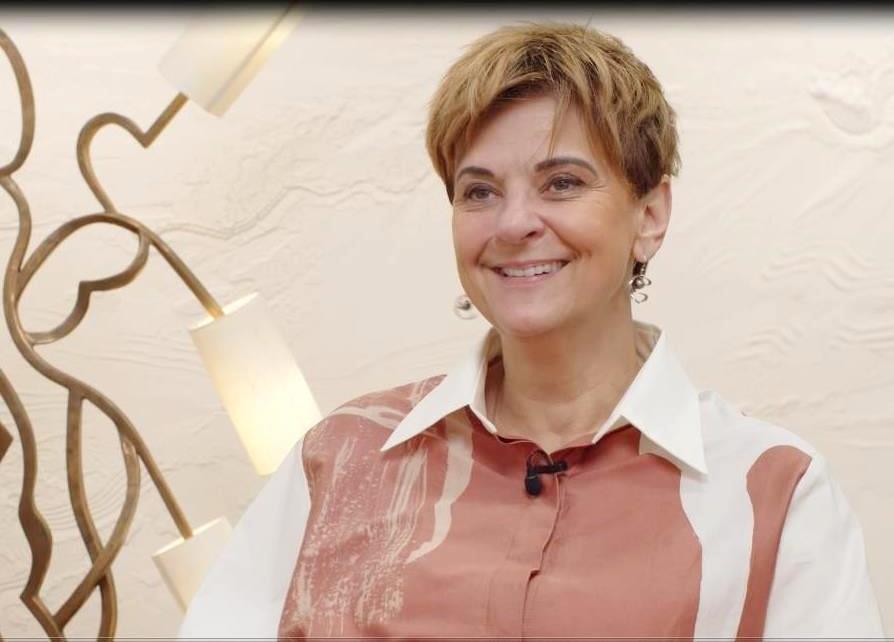
Rasa Baltė Balčiūnienė
VZ.lt
"As the lifespan of companies shortens drastically and employee engagement becomes the biggest headache for leaders, the desire to take initiative is discouraged by bureaucratic and hierarchical processes, heavy workloads, and often results in the silent departure of talented professionals with a wealth of experience. Current organisational management models tend to seek solutions to problems by investing in individual internal business processes. In an increasingly complex world, linear logic no longer works and some organisations are looking for a systemic solution to their challenges and are choosing to change their organisational management model from hierarchical, mechanical, linear, controlling, predictive systems to living, self-organising, self-directing, integrating, self-managing ecosystems, but managing this change is fraught with challenges." These are insights from the analysis of a qualitative study by marketing expert Ieva Čeponė, head of the Forvardas School, ISM Executive Masters, which clearly shows that organisations are going through a very similar phase of need. How to create an environment where timely decisions can be made and the organisation's management model can be changed?
Lack of common direction
"Both in my strategy sessions and in my series of exploratory interviews on lively organisations, I noticed that many organisations complain about common symptoms that they would like to change. These include the perception that there is a lack of common direction, that functions are unclear, and that internal communication is poor or lacking motivation. However, if after some time of working together and communicating, a higher purpose of meaning emerged - people seemed to come alive - now we see the same thing!", says Rasa Baltė Balčiūnienė, business psychologist and founder of the HAI Institute.
The goals that organisations set for themselves are usually certain indicators such as net profit, return on capital, market share, etc. However, the real direction is less definable. It is the desire to create something interesting, or to make a significant cultural change within the company, in the marketplace, that will create satisfaction and synergies. This is what motivates people on an emotional level, according to R. Baltė Balčiūnienė.
Lively organisations should not be confused with sustainable, green or socially responsible organisations. One of the key features of living organisations is growing results, a constant exchange of people, customers, products and energy. It is important to understand the intention behind the desire to create or transform an organisation into a living one - is it the desire to be unique, modern, on trend, or is it primarily an internal desire to create a healthy organisation? "In the first case, the organisation will be a pretty façade without substance, another construct of rationality. Creating an organisation based on the principles of living systems first requires changing one's own thinking and behavioural habits, which can often be emotionally difficult to do."
Seven key features of lively organisations
1. The direction of higher meaning. This is a direction of qualitative change, a direction of growth in the culture of the organisation. In traditional management, this is called future vision. "It is a change that affects the larger system, not in the short term, but has an impact, creates value in the long term, and often does not fit into the frame of linear thinking," notes R. Baltė Balčiūnienė.
2. Empowering people to act independently. This is the aspect that requires the most energy. It requires stopping the power games, knowing how to let go of control and promoting people's psychological adulthood. Some leaders find it difficult to let go of their power and control because they believe they will get a better result, others because they feel their own importance, perhaps emotional deprivation. "I remember a conversation with HAI alumna, entrepreneur Daiva Viskontiene, in which we observed that when you don't feel deprived anymore, then you realise that the limits end with you. Your growth happens through other people, empowering others to expand their own psychological, economic and cultural territory", says R. Baltė Balčiūnienė. Getting out of the power games focuses on value creation rather than energy-consuming ego conflicts.
3. Constant renewal. We see cyclicity in nature. For a new bud to grow, an old leaf must fall. R. Baltė Balčiūnienė points out that in organisations it is useful to constantly reflect collectively on which ways of doing things, which stereotypes are functional and which are not. "Anyone who feels frustrated, expresses dissatisfaction - sends important information. Either there is something wrong in the organisation, or he is out of place. This needs to be taken into account." Renewal is an opportunity to take a bigger step forward every time.
According to R. Baltė Balčiūnienė, a person improves when he/she starts to notice and change his/her mistakes in thinking and internal stereotypes. Sometimes giving up certain habits may seem painful, but it is necessary for evolution. In a lively organisation, this is a natural process.
4. Supporting diversity. Any ecosystem is only more fertile, richer and richer when it thrives on diversity. "The more different competences, generations, experiences there are in an organisation, the greater the diversity will be, and the more opportunities there will be for new things to emerge". For example, in an organisation with different generations, there is the experience of the older generations and the energy of the younger generations, a great desire for fulfilment and new knowledge. In such a harmony, long-standing patterns are constantly being "revisited" and new ideas have to stand the test of the company's core values.
5. Growing personalities. We spend a large part of our time at work. It's where we learn how to work in teams, communicate with customers, develop our professional skills, create new products and services, and deliver results. In living organisations, this process is done with intention, i.e. it is a deliberate environment where employees are free to create, to make mistakes, to know themselves and to realise their potential. It is therefore natural that organisations become a kind of school for personalities. According to R. Baltė Balčiūnienė, personalities grow in organisations by providing new challenges, tasks and opportunities for development. By maintaining constant conditions for development, this will also be the basis for the much-needed loyalty.
6. Sharing knowledge. "By sharing knowledge, we evolve faster. By sharing what we have accumulated, we can move forward", emphasises R. Baltė Balčiūnienė. If at least one organisation starts to change in a market or a country, the others react to the changes - a chain reaction. In lively systems, people not only work together, but also grow together by sharing knowledge.
7. Aesthetics. More conscious, higher cultural level societies, organisations desire aesthetics as a greater pleasure and satisfaction. "Aesthetics is not just about beauty - we are looking for aesthetics of thought and emotion as well. Aesthetics is the inspiration to act and create better, and the ancients used to say that it is the food of the soul". One of the still under-used ways of strengthening the internal culture of organisations is by creating an aesthetic environment.


 Rūdninkų g. 18-203, Vilnius LT-01135
 info@gilu.media